Building
Field note
ShadowPM
A lightweight backlog and delivery tracker for solo builders and small projects. Not Jira for one person. More like a quiet layer for keeping work visible, decisions honest and loose ideas from pretending they are progress.
Stream
Building
Format
Log
Updated
22 August 2026
A lightweight backlog and delivery tracker for solo builders and small projects. Not Jira for one person. More like a quiet layer for keeping work visible, decisions honest, and loose ideas from pretending they're progress.
Why Jira-for-one fails
Heavyweight trackers solve coordination problems: many people, shared state, accountability across teams. A solo builder doesn't have those problems. What a solo builder actually needs is memory (what did I decide, and why) and momentum (what's genuinely next, not what's shiniest). Most tools price those two things behind ceremony designed for thirty people. So I built the version without the ceremony.
What it is
Two small systems that grew together and now work as one:
- A Django + REST API core with a React board: projects, epics, tasks and sprints, with a five-column execution view and bulk operations for the unglamorous work of keeping a backlog truthful (import/export, bulk re-prioritise, bulk clean-up).
- A zero-dependency Python layer for fast capture and oversight: a quick-add web UI that runs from a single file, and a master view that aggregates the backlogs of every product I run into one screen.
Local-first on purpose: SQLite and JSON files I own, no vendor, no login wall between me and my own plans.
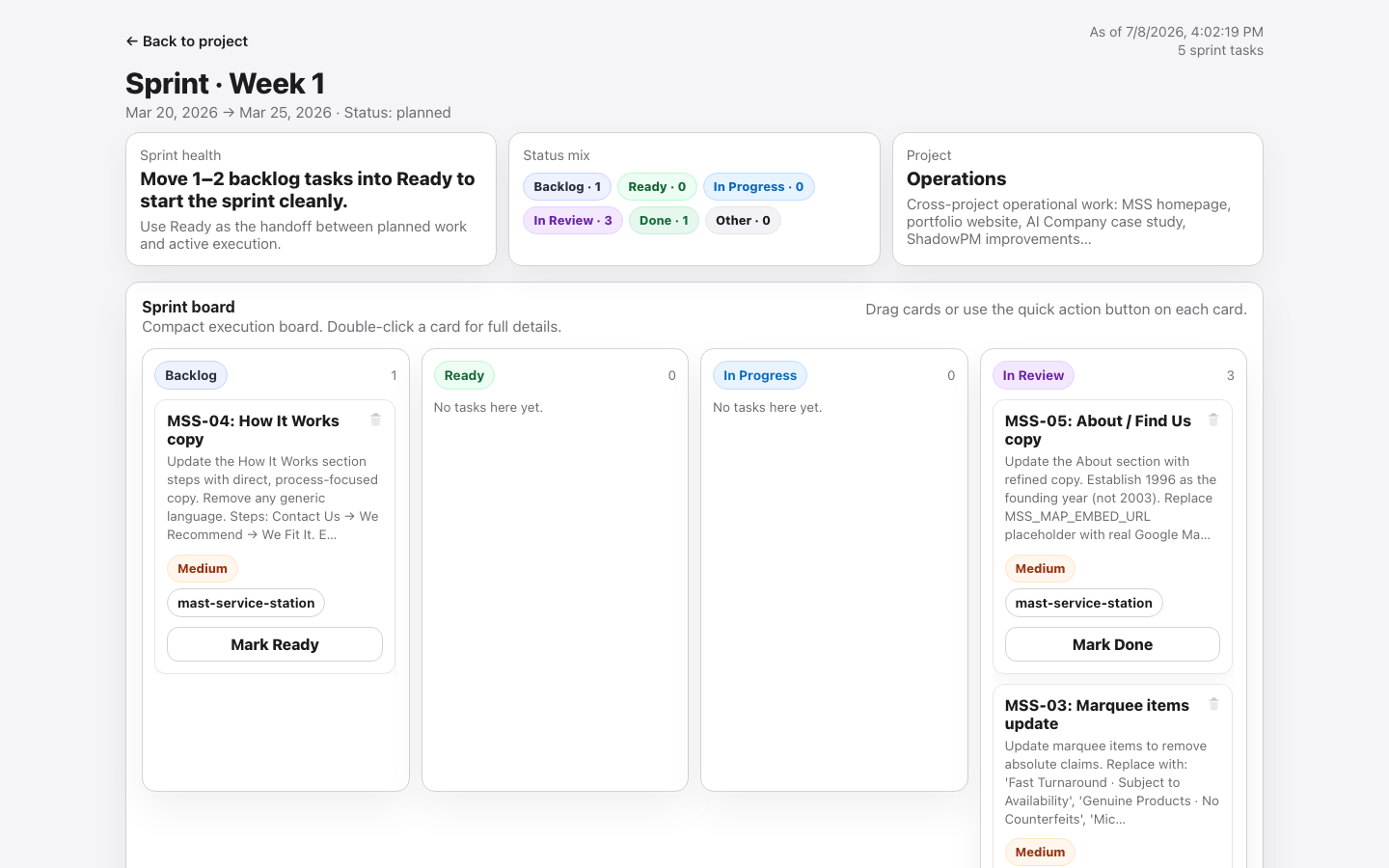
The sprint board: five columns, a sprint-health nudge, and nothing that needs a training course.
The AI loop
The part I use most. Work proposed by my AI tooling arrives on the board through signed webhooks, carrying provenance: which agent produced it, from which run, as what kind of proposal. Nothing executes on arrival; it lands as visible, reviewable intake. An agent-activity dashboard shows what the agents have been up to and what state their work is in. The design rule is boring and strict: AI proposes, I dispose. The board stays honest because nothing gets to skip the queue.
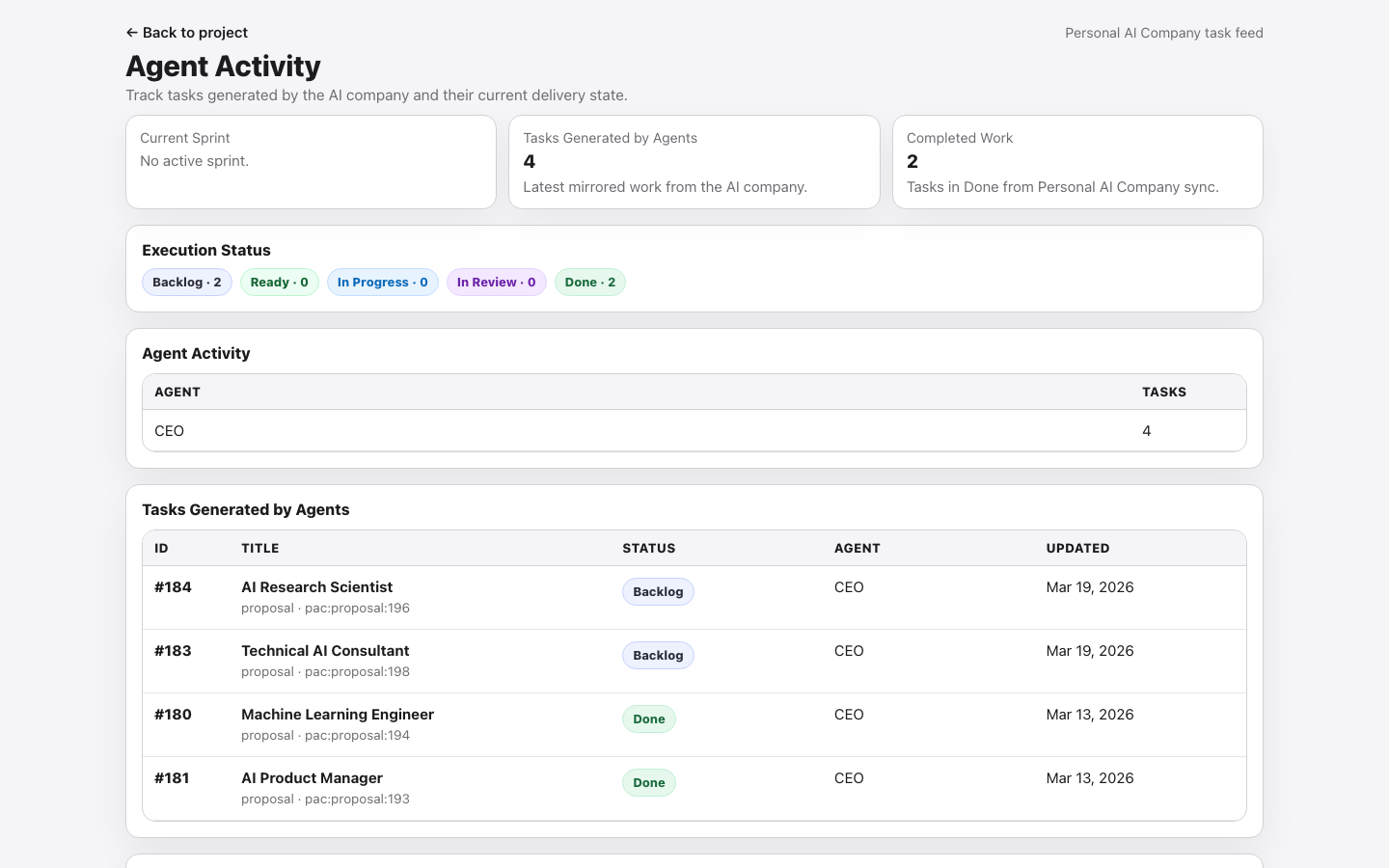
The agent-activity view: every AI-generated task arrives labelled with its agent, run and proposal ID.
A task on the wire looks like this (trimmed):
{
  "title": "Draft outreach note for pilot users",
  "status": "READY",
  "priority": "MEDIUM",
  "source_system": "personal_ai_company",
  "source_agent": "content-producer",
  "source_kind": "proposal",
  "source_run_id": "run_2026_06_18_042"
}
What building it taught me
Any tracker rots unless updating it is cheaper than not updating it. Features didn't fix that; removing steps did. The second lesson: visibility changes decisions on its own. Once every product's backlog sat on one screen, half of my "priorities" quietly resigned.
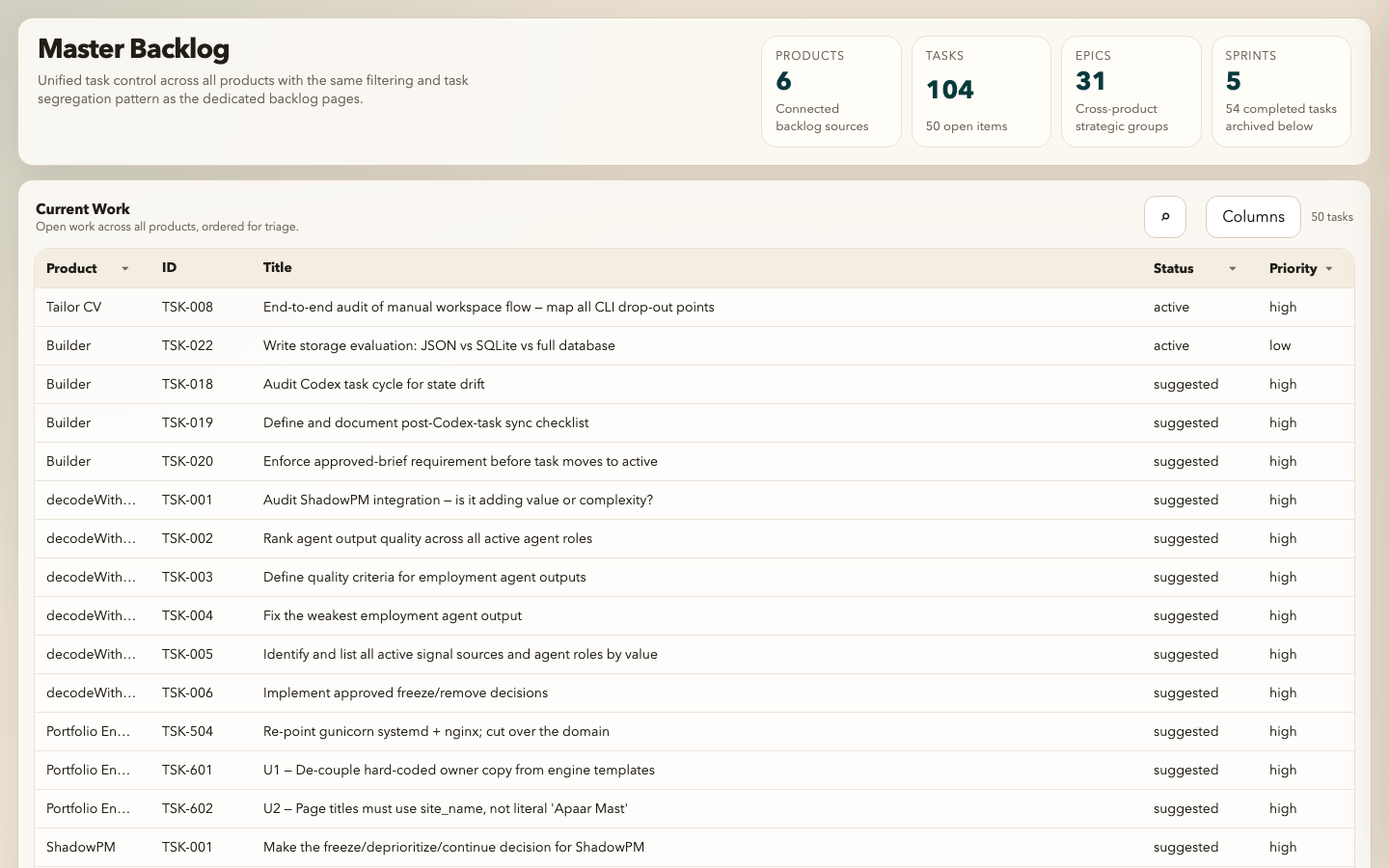
The master view: six products, one screen, no favourites.
Status
In daily use: this site, and the tool itself, are both run through it. On the bench: an async outbox for agent-side delivery, and better board discoverability. It earns its keep by staying small.